Published: 18/02/26 By: Mike Bekin
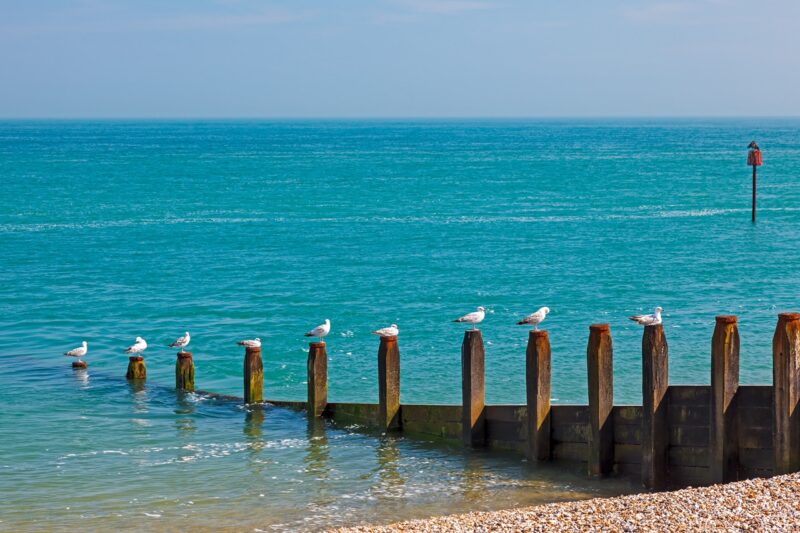
Timber has shaped both the UK’s coastal and civil infrastructure, with its use as a building material revered across every application. It has been the material of choice for the construction of the greatest British piers, with marine structures such as coastal boardwalks, piles, fenders and groynes following suit.
It takes a special set of qualities to make a timber species suitable for a marine or coastal development. In this no-fuss guide, we break down these characteristics and share the timber types which are the best options for coastal projects.
Challenges For Marine Timber
The marine environment is both challenging and demanding, especially over time. Timber degradation is the biggest long-term threat. Several factors accelerate this process and will compromise the integrity of the strongest timber types.
Biological attacks from marine borers (such as shipworm, gribble and fungal decay) are most prevalent. Physical abrasion damage from sand, sediment, saltwater, floating debris and hulls can cause further decay.
Choosing Timber For Coastal Use
Considering the challenges above, marine timber has to be tough to withstand or slow the effects of these harsh coastal conditions. Durability is key, with a class 1 or 2 timber typically required. A natural resistance to marine borers can also mean the difference between timber structures lasting mere months or decades.
Density, strength and stability are other qualities which will define if a timber species is well suited to marine application.
The Species Best Suited to Marine Life
Tropical hardwoods tend to deliver the best overall performance across marine and coastal developments. The following timber species are those we would recommend for use thanks to their durability, density and natural resistance to marine borers:
Ekki and Greenheart are two of the strongest timbers on the planet. They also have a naturally occurring oiliness which limits water penetration and slows rot. The chrysophanol and tannins found in these particular timber species makes them far less attractive to marine borers, guaranteeing natural resistance against shipworms and gribble.
Timber For Lighter Duty Applications
Temperate hardwoods and selected softwoods represent other possible candidates for your marine project. Oak and treated softwoods such as Douglas Fir, Larch and Scots Pine can be used in lighter duty marine environments. Oak, for example, is best suited for use in freshwater or upper tidal areas above the waterline. Treated softwoods are commonly used across marinas, river settings, light decks and floating pontoons.
Please note, we only stock British and European Larch, not Siberian Larch. Find out more about where our Larch wood is sourced here.
Sustainable Timber and Your Marine Project
Sustainability is another crucial consideration when selecting timber for your marine or coastal development. All the marine timber we stock at EcoChoice is sourced from responsibly managed forests, and accredited with either FSC or PEFC certification.
Get in touch with us to start your marine timber order today.
Tags: coastal developments, marine timber
Categories: Insights