Forest Plantations vs. Native Forests – Which Is More Sustainable?
Published: 23/02/22 By: Mike Bekin
Sustainability is always a complex topic. No matter what industry you are in, choosing the sustainable option isn’t always as easy as pointing to the obvious eco-friendly choice and saying “yes, that one, please!”. This is mainly because the sustainable option is not always obvious, which is the case when it comes to sourcing timber. Is it better to opt for wood from a plantation or a natural forest? If you’re unsure, we’ve got everything you need to know about both right here.
What’s the Difference Between a Plantation and a Natural Forest?
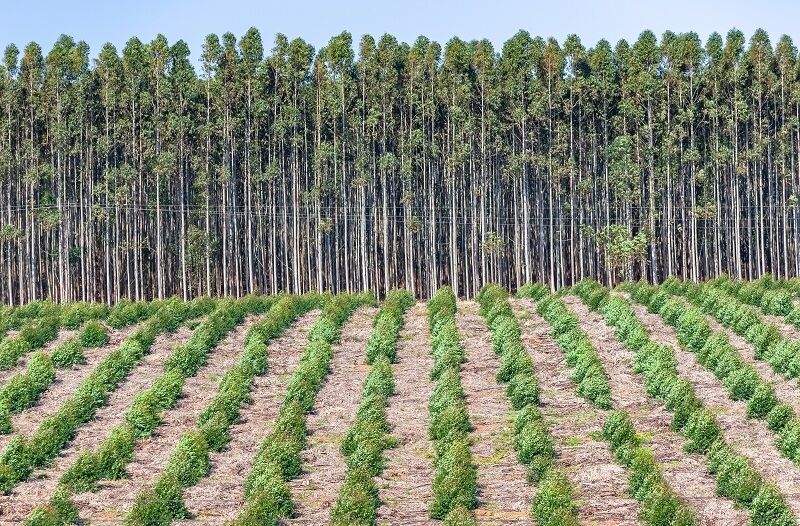
Natural forests are those that aren’t purposefully planted. They’re naturally occurring environments where tree species have appeared without human intervention. A plantation, on the other hand, is a man-made forest with only a few different species within it and in a far higher concentration than would ever occur naturally.
Of course, it’s not just Pine that is grown in plantations. Nowadays there are thousands of different tree species being grown far from their natural forests, and Eucalyptus trees are actually the most commonly grown in these man-made forests. The sole purpose of these plantations is to provide the planet with more natural, renewable wood for construction and pulp for paper and cardboard. So, if you purchase sustainable timber, it may have come from either plantations or from natural forests. But, which is better?
The Benefits of Plantation Forests
Much like agriculture, plantation forests are easier to manage and provide a higher volume of a single desired species, be it Pine, Larch or Oak. From that point of view, they are already a good idea! Without plantations, we simply wouldn’t be able to source all the timber we need, and there would be dire consequences for the world’s forests. The more timber we harvested, the fewer trees we would have.
They also provide great perks, such as absorbing CO2 from the atmosphere, controlling soil erosion and providing lots of jobs.
Benefits of Natural Forests
Natural forests have a tremendous positive impact on the planet, and their conservation is key to the health of our world. Apart from supplying us with rare and useful hardwoods, they are an invaluable source of biodiversity. Biodiversity, as the name suggests, is a measure of how intricate the web of life can become, interconnecting thousands of different species together: plants, animals, insects, fungi. These species depend on each other – and we depend on them – for many of the things we take for granted, such as medicines. The conditions for these mutual relationships can only happen in natural forests, where nature leads the way.
So Plantation forests are better for the volume of single species, and natural forests for a variety of species.
Do Plantation Forests Improve Conservation of Natural Forests?
Plantation forests are a brilliant way to conserve the demand on the world’s natural forests, thus protecting that vital biodiversity. One simulation which looks at the supply and demand of timber around the world showed that logging in natural forests could drop by half in 2025 compared to 2000, and that is all due to plantations. For natural forests, this is an undeniable win!
Forest plantations have a prominent role in substituting what we previously found in natural forests. They’re undeniably important in conservation and without them, our natural forests would suffer. However, it’s not all positives.
The Downside of Forest Plantations
One negative aspect of forest plantations which has to be considered is that they could undermine the value of natural forests. By being able to ship out huge quantities of cheap timber in a way that natural forests simply can’t, the value of natural forests decreases and our attention is re-focused on plantations. This could reduce conservation work in these areas that really need to be protected, and maybe allow them simply to be burned and converted to cattle pastures. In areas where law enforcement isn’t adequate, forests are especially at risk as their value goes down.
As we’ve already mentioned, the positive impact of natural forests on our environment is far greater than that of plantations. So, this simply can’t happen. Even if we replaced natural forests with plantations the effects would still be devastating, which makes conservation of the natural land essential.
What’s the Answer?
As with everything in sustainability, it all comes down to balance.
Sustainable forestry is all about balancing the needs of wildlife, communities and the environment with the needs of the human population. We can’t stop harvesting forests, we can’t only harvest trees from natural forests and we can’t only focus on plantations. None of these is a good solution. Instead, there must be balance in order to conserve our forests and meet timber demands without harming essential natural processes and protecting indigenous forest peoples.
One option is to harvest from plantations whilst also harvesting from natural forests in a responsible way. By doing this, natural forests aren’t overwhelmed by our needs but they are also not forgotten, and we continue to maintain the timber, fruit and other forest products that we need.
How Forestry Can Be Sustainable – Even in natural Forests
At EcoChoice, we know that forestry can be sustainable. By working with the FSC®, we promote and sell timber that’s independently certified as being responsibly harvested. The FSC supports both the use of plantations and managed forests, ensuring the industry gets the balance it needs and maintaining the conservation of natural forests. It doesn’t support turning natural forests into plantations, as this is very detrimental to delicate biodiversity.
The FSC protects millions of hectares of forest. By following its principles, natural forests can be used to supply timber whilst not compromising their environmental benefits. When trees are felled, they’re left to regenerate naturally, and the FSC ensures that forests are not over-harvested. They may also keep certain areas of the forest completely protected to help wildlife thrive and support the natural environment.
How Responsible Farming Makes Forever Forests
Forever forests are spaces where the woodland is purposefully managed to last – the opposite of deforestation, basically! In these spaces, old-growth trees – which are vital for certain species’ survival, providing valuable fruits and nesting spaces – are protected, while young saplings are planted to replace felled trees. There is a constant flow of regeneration and protection, ensuring the forest is never depleted by timber supply.
Responsible timber harvesting is a key part of building forever forests, with many of the same principles. It provides farmers with a way to create an income from their land without destroying habitats and ecosystems, which is better both for their community (providing an income for many generations to come) and for our planet.
Well-Managed Forest Lifecycles
To ensure well-managed forests last forever, they follow a lifecycle: plant, grow, fell and plant again. It is a cycle which can loop infinitely when done properly.
As we mentioned, some older-growth trees must be protected, to keep a diverse landscape. An entire forest of young trees does not provide the variation needed for a wide range of species, so it is vital this policy for older trees is upheld.
It is also important to note that harvesting is done consciously. No more trees are taken than needed, and no single species is overharvested, ensuring that the ecosystem remains in balance for a flourishing forever forest.
Regeneration of Damaged Woodlands
Well-managed forests could also help reverse some of the deforestation seen over the past century – though there is a lot to tackle! In the past few years, it has been discovered that tropical forests can bounce back to full bloom in just 20 years, making it a viable option for mitigating climate breakdown and reviving lost habitats.
Investing in responsible forestry gives farmers, businesses and policymakers more incentive to action the recovery of these lands. Money drives change, and if there is money to be made in well-managed native forests, it is more likely they will be prioritised.
So, not only could responsible forestry conserve our existing woodlands, it could also help save those which we have lost.
Can Well-Managed Forests Last Forever?
Forever forests and well-managed woodlands aim to speed up the scale of conservation in these much-needed spaces. It creates huge areas of safeguarded lands which, with the right certifications, can be protected for hundreds of years to come – or forever! But, it takes consumers making responsible decisions to keep up this good work.
Make the Sustainable Choice With EcoChoice
If you’re looking for timber that doesn’t harm the world’s forests, choose EcoChoice. We have a wide variety of timber species from around the world, all of which are independently certified and tracked to ensure they are from responsibly managed forests. If you would like to learn more about our timber and our eco values or get advice on which species is right for your project, get in touch with our team today and we will be more than happy to help.
Image: ChrisVanLennepPhoto / Shutterstock.com
Tags: Sustainability
Categories: Insights