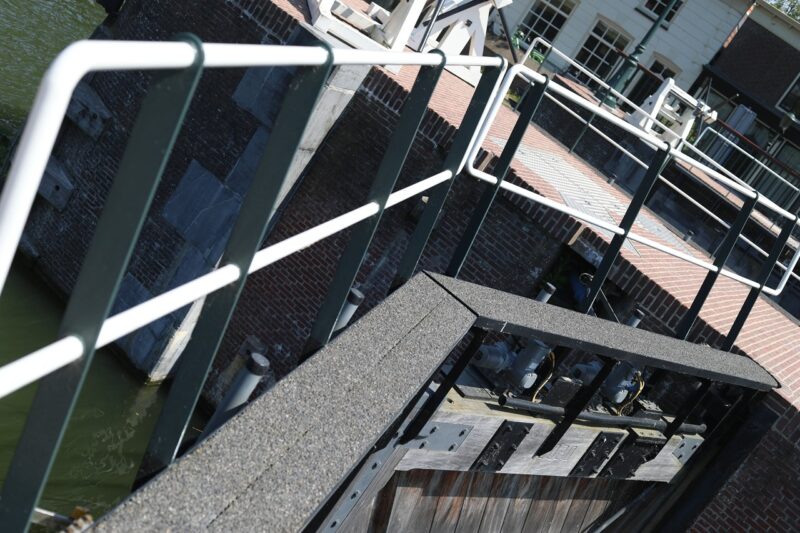
Published: 17/12/25 By: Mike Bekin
Timber-built lock gates are more than a legacy from the age when we shipped most of our produce by canal: they continue to offer a technically and aesthetically sound solution when correctly specified. On waterways, rivers and canals, the gate must resist constant water pressure, impact from boats, wet/dry cycles and often partial submersion. For these uses, timber offers inherent resilience, a natural look which complements the historic environment, and (when suitably sourced and maintained) a long service life.
What you need from your timber species
Selecting timber for lock gates means matching material properties to demanding exposure.
- Use Class 5 suitability (permanent contact with water or soil) so that the timber is engineered for submersion or damp-contact environments.
- High natural durability against decay, fungi and wood-boring organisms which can live in freshwater or tidal environments.
- Structural strength and dimensional stability given the load from water pressure, debris, boat impact and decades of service.
- Sourcing and certification to ensure that material is responsibly harvested and traceable.
When these factors are addressed, timber lock gates can deliver many years of effective service.
Key species for lock gate timber
Here are some of the timber species most suited to lock gate construction and refurbishment:
Ekki
Ekki is a tropical hardwood which stands out for its exceptional density, durability and resistance to wet conditions, making it a top tier option for lock gates.
Greenheart
Another tropical hardwood frequently specified for hydraulic and marine applications. Its natural durability in water-exposed conditions, ability to resist swelling/warping and suitability for high load make it highly desirable for lock gate builds.
Oak (Green or European)
Oak continues to be a trusted choice for heritage, freshwater lock gates or refurbishments, particularly where traditional appearance and availability are important. As a British/European species, oak offers obvious benefits in sourcing and familiarity. However, oak’s natural resistance does not match the top tropical hardwoods for full submersion use, so its specification must reflect that (less tidal/sea exposure or additional protection).
Best practices for specification, installation and maintenance
To ensure a lock gate built of timber performs to expectation, the following practices are vital:
- Site-condition survey and design: Accurate measurement of the lock chamber, wall angles, water levels and boat traffic impact is the first step. Good design ensures the timber is sized correctly and fitted with appropriate fixings.
- Dimensioning and machining: Dense hardwoods such as Ekki or Greenheart may require specialist tooling. Boards and beams must be square, machined to tolerance, and with joints (mortise/tenon or steel-reinforced) designed for hydraulic load.
- Protection and finish: Even naturally durable species benefit from appropriate coatings, sealants or rub treatments at contact points, fixings or wear zones.
- Installation details: Ensure proper drainage behind the gate leaves (where relevant), correct alignment of mitres, secure balancer beams and robust fixings or bearings.
- Regular inspection and maintenance: Even the best timber will degrade if neglected. Plan for routine checking of joints, fasteners, swelling, wear from boats or debris, and make localised repairs to prevent the need for full replacement.
- Appropriate species to exposure match: Choose inherently resilient species for the highest exposure sites (tidal canals, boat traffic, full submersion). In calmer freshwater settings, species with slightly lower durability may perform well if correctly specified.
The case-for timber
While steel, concrete and composite gates are available, timber holds distinct advantages in many canal infrastructures:
- Aesthetics & heritage compatibility: Timber offers a traditional appearance which complements historic waterways.
- Workability & repairability: Timber components can often be replaced or repaired more easily than extensive steel fabrication.
- Sustainability credentials: When sourced from certified forests (FSC, PEFC) and maintained correctly, timber lock gates support circular economy and renewable resource goals.
Selecting timber for lock gates is much more than choosing “the nicest wood”. It is about assessing species durability, structural strength, exposure conditions and expected lifecycle. For the highest durability, tropical hardwoods such as Ekki and Greenheart set the benchmark in Use Class 5. For freshwater or heritage settings, responsibly sourced oak remains a valid contender.
Combine the correct material with robust design, precise manufacture, installation and planned maintenance, and a timber lock gate becomes a strong and secure long-term asset for your canal infrastructure.
Ready to specify timber which stands up to the toughest conditions?
Reach out to EcoChoice, the UK-based specialists in FSC/PEFC certified timber solutions for demanding civil, marine and heritage applications including lock gates, piers and canals. With their long expertise in high-durability species such as Ekki and Greenheart, plus full support on specification, machining and logistics, EcoChoice are uniquely placed to help you get it right from structural performance to compliance and longevity.
Make the smart choice for your next lock-gate or water-borne infrastructure project:
- Call 0345 638 1340 or email sales@ecochoice.co.uk to start a conversation. (Ecochoice)
• Ask about suitability for Use Class 5 environments, bespoke machining and lead-times for your site.
• Request samples, specification sheets or a project briefing to get your design moving.
Do not settle for a generic solution. Choose timber which is engineered, certified and backed by experience.
Tags: lock gates, marine timber
Categories: Insights