Let's go!

Building with wood has many great benefits. Timber has been used over hundreds of years to build quality, long lasting buildings and structures. But why is it so good? Here are just a few facts that show why wood is an amazing and interesting material.

1.  Timber is very versatile

Timber can be used for many applications. Not only is it used heavily in the construction industry, it can be used for sea defences, sports equipment, gazebos and decking in the garden.

2. All wood is biodegradable

Wood is capable of being completely decomposed by bacteria and other biological agents.

3. Timber is a natural insulator

Timber is five times better than concrete as insulation. Wood works well as an insulator because of all the empty space it contains in its cells. This means that wood can retain heat, as opposed to conductors such as metal which transfer heat easily.

4. Timber is a sustainable and renewable resource

A sustainable resource is one which is used or harvested in such a way that it is not depleted or permanently damaged. Provided we give them time, trees grow naturally so no energy or other raw material input is needed in creating this magnificent resource. If harvested responsibly, at a rate which the forest can continue to be healthy, timber supply can be never ending.

5. A timber building can last as long as a brick building

Depending on many external factors such as climate, weather, location and maintenance, a wooden house can easily last as long as a brick one. Wood performs better than brick, particularly in areas prone to high winds or earthquakes.

6. The terms softwood and hardwood describe the leaves, seeds and structure of the tree rather than the strength of timber they produce

Although overall softwoods are less dense than hardwoods, it is not density alone that determines which category the wood falls under. Hardwoods come from trees which are flowering plants and keep their seeds in an outer casing such as a fruit or acorn. Softwoods, in contrast, derive from evergreen trees which spread their seeds on the ground using cones and occasionally nuts.

7. 12% of the UK is woodland

This figure is low for a European country. In comparison, Germany has 32%, Italy has 35%, France has 37%, Russia has 49% and Finland has a staggering 72%.
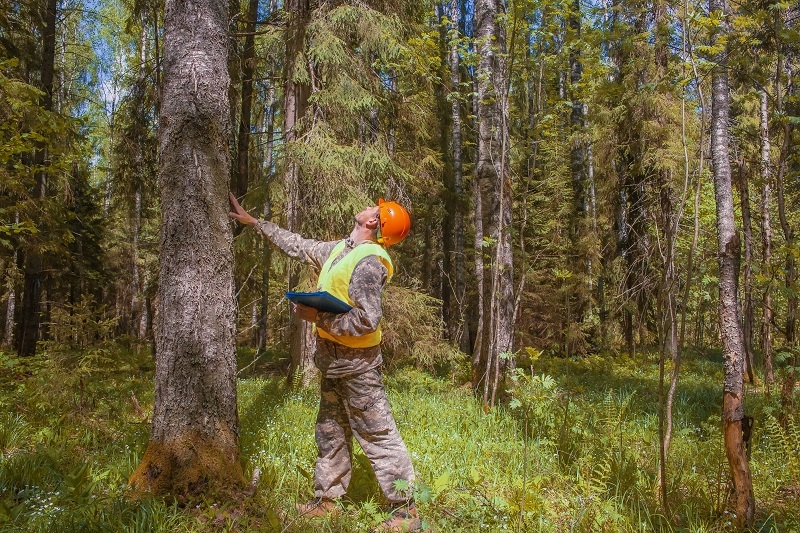
8. It can take decades for trees to reach maturity

All trees reach maturity at different times. Some oak trees mature when they are 25-30 years old whereas apple trees tend to take 6-10 years depending on whether they are semi dwarf or standard varieties. Other trees reach maturity only when they become a certain size.

9. Trees do not die of old age

Although old age can be a contributing factor, it is never the main cause of death for a tree. Trees are killed by elements which are outside of their control. These can include insects, the weather conditions, or be the result of people. However, when a tree gets older, it has more trouble protecting its inner heartwood which means it cannot fight off damage as effectively as younger trees.

10. Some trees communicate with each other

Ecologists have found fungi that forms underground communication networks between trees. Older trees, known as “mother” trees, are the centre of the network. Studies have shown that the trees share resources using these networks and that they also use the networks to warn neighbouring trees about impending attacks from pests.

11. There are thousands of different species of tree on Earth

It is believed that there are over 60,000 types of trees in the world after extensive studies were carried out. Apart from the polar regions where there are none, North American had the fewest number of different species with approximately 1,400. More than half of the trees can only be found in one country and about 300 species were identified as critically endangered. The most common trees found in the UK include ash, aspen, silver birch, oak and chestnut.

12. More trees are planted than harvested within the European timber industry

When using reputable suppliers for timber, more trees are planted for every tree harvested, creating an increasing sustainable supply of wood for future generations.

13. Some trees can live for thousands of years

Some trees across the world are thought to be 5,000 years old. The oldest tree is thought to be a Norwegian Spruce found in Sweden which is believed to be over nine and a half thousand years old. In the UK, The Woodland Trust revealed there are at least 117 oak trees which are around 1,000 years old.

14. Softwoods account for about 80% of the world’s timber production

Although pine is a softwood, it is denser than even some hardwoods, making it a popular choice as timber as it’s a more affordable option. Oak on the other hand is the most popular and widely used hardwood.

15. Trees get most of their nutrition from the atmosphere

90% of their nutrition is from the air, with only 10% coming from the soil.

Who is Eco Choice?

Eco Choice are specialist suppliers of certified timber and recycled plastic products. We were formed in 2005 with the aim of promoting FSC certified timbers to the UK construction industry. We offer products from a wide range of different timber species, including Iroko wood and Larch wood. We are passionate about supplying our clients with independently certified timber products while encouraging responsible and sustainable practices at the source level. To find out how we can help you and to get a quick, no obligation quote, please call us on 0345 638 1340, email us on info@ecochoice.co.uk or for more information about our sustainable timber products, please visit our website.

Tags:

Categories:

Timber facts

Ask Joe! Expert industry advice

Unsure which timer is best for your project?

Our timber experts have years of experience and will be able to match the perfect species to your project, as well as provide a quote for sustainable timber at highly competitive prices.

Frequently asked questions

Do you supply timber for domestic uses?

Yes, we supply timber for domestic applications as well as commercial and public constructions. From garden decking to shed cladding, we will be happy to supply smaller deliveries for home use.

Is your timber FSC-certified?

Yes, all timber we supply is FSC or PEFC certified and sourced from independently verified responsibly managed forests. If we can’t find your request in FSC/PEFC certified timber we’ll suggest an alternative that is certified or clearly note that the offer is minimum EUTR.

Where does EcoChoice deliver to?

EcoChoice delivers to construction sites, warehouses and homes across the UK, as long as there’s access and unloading for our trucks.

What are the best timber species for exterior use?

There are many different timber species suitable for exterior use and which is the best for your project depends on your requirements. In general, though, we recommend EkkiGreenheartOpepe and Oak for heavier civil/marine uses. For intermediary external use such as decking, where the timber needs to be both strong and durable but not on the same level as civil engineering (bridgespiling, etc) we usually supply CumaruIpe, Jatoba, and Balau. And for the lighter exterior use where the timber is non-structural such as cladding, we deliver CedarLarchThermowood and others.

Which timber is the most durable?

Durability Class 1 timbers are the most durable. This of course depends on the use (hazard) class they’ll be in service for. For direct ground and water contact such as sleepers, fenders, marine piling, etc, Ekki and Greenheart are known to be the most durable timbers available. For decking and cladding where there’s no direct ground contact (use class 3) there’s a much wider range of timbers such Larch, Cedar, Thermo modified Pine or Ash and others.

What’s the best timber for internal cladding?

Internal cladding, where your timber is not in ground and not exposed to the elements can be classed as either use-class 1 or 2 – in which case most timbers will meet this durability criteria. That is not to say they’ll be the best, since internal environments have lower humidity (moisture) levels than outside. So in these cases, it’s best to go for a kiln-dried timber cladding board as these are more stable and delivered already in lower MC (moisture content) than the usual fresh sawn timbers sent to external applications. A word of caution – as timber reacts to variations in moisture, it’s best to avoid cladding any areas inside your bathroom.

How can I make decking less slippery?

The first thing is to ensure your deck boards are kept clean from leaves and other debris which will, over time, cover the surface and make it more slippery. Grooved boards can be used to improve grip if installed and used perpendicular to traffic, so especially useful in narrow passages and footbridges. Lastly, you can add our Grip-Choice strips: these are a mix of epoxy with aggregates that add gripping ridges to your deck area. Gripchoice is an easy way to make decking less slippery and safer, especially over large areas or where there’s high traffic. We can pre-install Grip-Choice strips for your decking before delivery or ship the strips separately to add to your existing deck’s grooves as a retro-fit solution.

What wood machining services do you offer?

We can offer planing, sawing, drilling and profiling of rough-sawn wood to any profile you require: from handrails to large port fenders.

Can you supply pre-drilled timber?

Yes, we will be happy to provide pre-drilled timber which is tailored to your needs for quick installation, thus saving you valuable time on site.

What cladding profiles do you supply?

We provide a wide range of cladding profiles, including tongue and groove, featheredge and shiplap. You can check the standard profiles here – but we can also match or custom make profiles to suit your specific needs.

Does timber change colour?

Yes, timber is well-known for changing colour over time. Some species can darken quickly right after installation, and like most untreated wood will eventually weather to a beautiful silver-grey. Interior timber is less likely to change colour (depending on conditions), and timber can be stained, painted or treated with UV-resistant oils to reduce colour change.

Do I need to treat exterior timber?

Some timbers such as Oak and Ekki, can withstand the strains of exterior use without any treatment. However, to extend the lifespan and maintain the aesthetic of your wood, we do recommend treating your timber with stains and oils. Pre-treated timber, such as ThermoWood and OrganoWood, are low-maintenance options which are more durable, but can have their life service extended by applying a clean and stain maintenance schedule.

Do I need to treat interior timber?

Depends on what area the timber is being used. For floor joists and timber rafters, it is common to see timber treated, or least very well kiln-dried. Other uses such as flooring may benefit from varnishing while internal timber cladding for decorative purposes shouldn’t require any treatment other than if you want to change its colour with different types of stains or oils.

Where are you based?

We’re based in Cambridge, UK, and coordinate multiple sawmills all over the world to manufacture your order. We then organise delivery with a range of hauliers so that your orders gets to your site on time.

What are the usual decking sizes?

Timber decking is usually 21x140mm or similar. For heavier applications where there’s more load and traffic, we deliver 35 or 45mm thick boards (such as Hastings Pier). Narrower boards are also possible: 95-90mm is a standard width – but we can manufacture whatever size you require.

What are the usual cladding sizes?

Typical cladding section sizes are 18×95 and 18x145mm although we can always custom make a section to suit your project’s design requirements. That includes waney edge boards in Oak or Chestnut as well as extra wide 195mm boards.

Trusted by

What our customers say about us

Good quality, great service, fast delivery!

5

Marinella Li

Always helpful! One of our valued TDCA DeckMark and CladMark accredited supplier members which means their quality procedures are routinely audited and stand up to scrutiny giving you extra peace of mind.

5

Janet Sycamore

Having needed the supply of cladding, decking boards and other specified timbers through out the year Eco choice have been very helpful in sourcing the specified timbers and quantities required at a very competitive price.

5

Tim Saunders

Great quality, service and price. A pleasure to deal with. I would highly recommend Eco Choice.

5

Emma Hurrell

Fantastic company- Mike and the team are the best in the business- worked with them for many years.

5

Prem Raja

Always reliable and quality products, easy to deal with company.

5

Stone Zone

4.9

Average rating on Google Reviews

  • 6 years ago

Having needed the supply of cladding, decking boards and other specified timbers through out the year Eco choice have been very helpful in sourcing the specified timbers and quantities required at a very competitive price.

Tim Saunders

  • 6 years ago

Great quality, service and price. A pleasure to deal with. I would highly recommend Eco Choice.

Emma Hurrell

  • 9 years ago

Great service, quality products and very easy to deal with. Thank you.

Malcolm Coury

  • 6 years ago

Fantastic company- Mike and the team are the best in the business- worked with them for many years.

Prem Raja

Your enquiry

This field is for validation purposes and should be left unchanged.
Name(Required)

Contact us today

Opening hours

Mondays: 09:00 – 17:00
Tuesdays: 09:00 – 17:00
Wednesdays: 09:00 – 17:00
Thursdays: 09:00 – 17:00
Fridays: 09:00 – 16:00
Saturdays: Closed
Sundays: Closed