Published: 07/01/26 By: Mike Bekin
Timber has been at the heart of British construction for thousands of years, shaping everything from our earliest homes to the structures along our coast. Thanks to its durability, it has also left a trace of construction over time, helping us uncover secrets of the past and snippets of pre-civilisation human life.
As self-confessed timber enthusiasts, our team at EcoChoice loves delving into the history of timber use in the UK. Learn more in this quick guide about the wonderful story of this resilient, enduring material and the evolution of timber in UK construction and marine use.
First Known Timber Constructions
In the UK, archaeologists have uncovered evidence of timber homes from over 10,000 years ago (8,000 BC), a few thousand years before the official start of ‘civilisation’. These timber-framed buildings were built at the dawn of agriculture, when humans were just learning to farm crops and keep livestock, and the very first towns and cities were beginning to take shape. This was the age of woolly mammoths, giant ground sloths, and British Elk – and, of course, timber construction was already there.
Medieval Timber Construction
By the medieval period, timber building in Britain had evolved into a highly skilled craft with regional styles and techniques that are still admired today. Oak became the preferred structural species thanks to its strength, durability and natural resistance to decay, with carpenters developing increasingly sophisticated framing systems.
Timber-framed houses, barns and halls from this era were typically built around a robust “bay” system, where large vertical posts supported horizontal beams and arched braces. This method created open, spacious interiors and allowed buildings to reach impressive heights and spans without the need for metal fastenings.
Timber in Early Bridge Building
As settlements expanded and trade routes stretched across rivers and valleys, timber became the material of choice for Britain’s earliest footbridges. These timber crossings allowed people and livestock to move safely between communities, connecting the country in a way not possible before.
These early bridges typically used heavy Oak beams laid across riverbanks and supported by timber piles driven into the riverbed. Over time, carpenters refined the designs, developing trestle bridges with triangular bracing which distributed weight more efficiently and resisted fast-moving water. Medieval records describe countless timber bridges maintained by local guilds or monasteries, many of which formed the backbone of regional travel networks.
The Iconic Tudor Homes
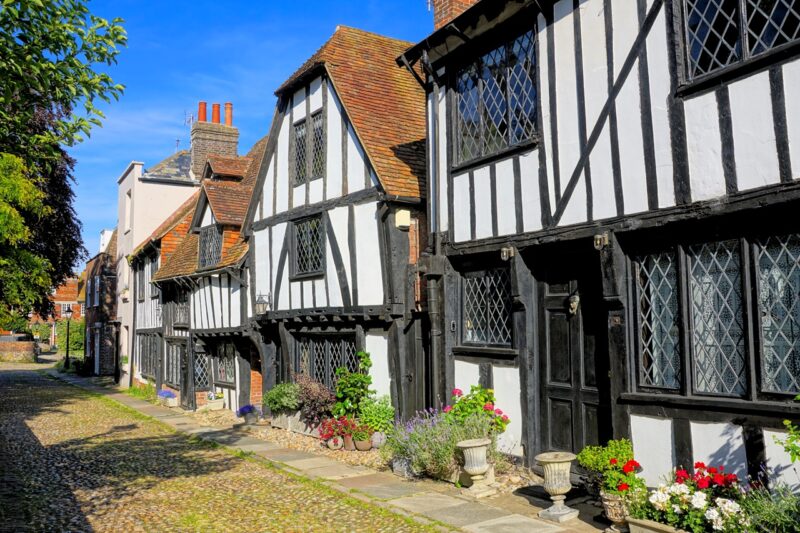
We cannot talk about the UK’s history with timber without mentioning Tudor homes. These black and white, exposed Oak beam properties are still renowned for their beauty and architectural interest. Plenty of these homes are still standing, including:
- Tudor House in Southampton (dating back to 1180AD)
- The Ancient High House in Stafford
- Blakesley Hall in Birmingham
These homes are a testament to the durability of timber in construction, withstanding hundreds of years of wear and tear while still looking absolutely beautiful.
Timber in Marine Construction
Timber played a crucial role in shaping early marine construction. Most well-known is the use of timber in boat building, which dates back to around the same period as the first timber homes. In fact, around 8,000 years ago, a timber boat was being made on the Isle of Wight, where it was left unfinished as sea levels rose and it became buried under the marsh. It was not until the late 20th century that this boat was uncovered, after spending thousands of years buried in the dark.
Over the years, coastal communities have relied heavily on locally available timber. They began with simple structures to withstand tides and catch fish, and when the Romans arrived in Britain, there is clear evidence to show that they were using timber piling in marine construction.
Eventually, marine timber construction led to one of the country’s most notable marine structures: the pier. Early piers were essentially long timber walkways supported by rows of driven piles, extending far enough into the sea to reach deeper water. By the 18th and 19th centuries, as seaside resorts grew in popularity, piers took on a more recreational role and have been used as attractions ever since.
Modern marine constructions still see a lot of timber use, with everything from beach groynes to fenders being made of durable, rot-resistant species.
Learn More About Timber
Timber is, undeniably, our most versatile and sustainable building material. It has shaped our country for thousands of years and continues to do so, taking centre stage in the evolving landscape of eco-friendly construction. To learn more about timber, check out more on the EcoChoice blog.
Looking to purchase sustainably sourced timber for your next construction project? Get in touch to start an order.
Tags: marine construction, timber housing
Categories: Insights