Published: 19/11/23 By: Mike Bekin
Timber cladding has become a popular choice for both interior and exterior design in recent years, adding warmth, character and a touch of nature to homes and buildings. One of the key factors which determine the aesthetics and functionality of timber cladding is what profile you go for. To make things easier, our EcoChoice experts have put together everything you need to know about the most popular styles. Let’s jump in!
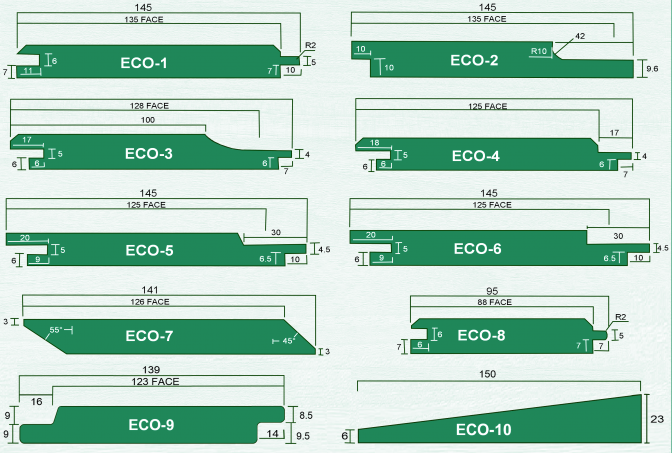
Tongue and Groove – Eco1, 3, 4, 5, 6 and 8
Tongue and Groove timber cladding is a classic and timeless style which features interlocking boards with a tongue (a protrusion) on one edge and a groove (a slot) on the opposite edge. When installed, these profiles fit snugly together (important to leave a micro gap between inside the groove so the timber can breathe and expand if needed), creating a seamless, flat surface. This profile style offers a range of benefits, including:
- Greater board stability as the boards lock each other in place.
- Weather resistance: the tight fit between boards provides excellent protection against moisture and wind, making it suitable for exterior applications
- Aesthetic appeal: Tongue and Groove cladding offers a clean and elegant look, often associated with traditional and cottage-style homes
- Insulation: the interlocking design can improve insulation properties, helping to regulate interior temperature
Common applications include exterior house cladding, and interior wall panelling and ceilings, for a neat, even finish.
Feather Edge – Eco10
Feather Edge cladding, also known as tapered-edge cladding, is characterised by boards which are thicker at one edge and gradually taper to a thinner edge. But what are the benefits? Let’s take a look:
- Rustic appearance: feather edge cladding is commonly used in more traditional designs for a charming, rustic aesthetic
- Water runoff: the tapered design encourages water runoff, helping to prevent moisture from penetrating the cladding
- Easy replacement: individual boards can be replaced if damaged, making maintenance more straightforward
It is often found on older homes, barns and period properties, but can also add character to modern designs seeking a classic touch.
Shiplap – Eco2, 9
Shiplap cladding is a popular choice for both interior and exterior applications. It features cladding boards with a groove at the top and a corresponding tongue at the bottom, allowing them to overlap and create a horizontal, uniform appearance:
- Modern and versatile: shiplap is a versatile profile style for contemporary, coastal and rustic designs.
- Weatherproofing: the overlapping design helps protect against moisture, making it ideal for exterior applications.
- Interior design: shiplap is frequently used for interior walls, ceilings and feature walls, providing a trendy, textured look.
If you are opting for a minimalist, modern look, shiplap is a great cladding profile to look into.
Parallelogram – Eco7
Parallelogram cladding, also known as rhombus or diamond-shaped cladding, is a more unique and modern choice. The boards have a parallelogram shape which, when installed, creates a visually striking pattern which is ideal for bolder aesthetics. Benefits of parallelogram cladding include:
- Contemporary aesthetics: parallelogram cladding offers a unique and distinctive look which can make a statement in modern architectural designs.
- Artistic appeal: the geometric pattern adds an artistic touch to buildings to help them stand out from the crowd
This style is often used in contemporary homes, commercial buildings and architectural projects for a one-of-a-kind design.
Find More Advice at EcoChoice
Choosing the right timber cladding profile style for your project can be tough, but with such an impact on form and function, it is important you get it right! If you need help choosing your perfect profile, our timber cladding experts at EcoChoice are here to help. Reach out today and let us pair you with the right boards for your project.
Tags: cladding profiles
Categories: Insights