Published: 29/12/25 By: Mike Bekin
Taking a DIY approach to building a deck? Make sure you have the lowdown on decking spacing before you get started. Those small gaps between your boards are not just there for looks; they play a crucial role in keeping your deck safe, sturdy and looking great for years to come.
Let’s take a closer look at why decking spacing matters, and how to make sure you are getting it right from the start.
Timber Does Not Stay Still
All timber, no matter how tough or well-treated, experiences moisture-related movement. This is when the wood naturally expands and contracts as temperature and humidity change throughout the year.
When it is warm and dry, timber boards can shrink slightly as they lose moisture; when it is cool and damp, they can swell.
Interestingly, timber moves more across its width than it does along its length. So while your decking board’s length might only shift a little, its width can expand and contract enough to make a real difference, causing potential problems for your decking. This is exactly why leaving the right gap between your boards is a must, giving your timber room to shift without pushing against each other.
Proper Spacing Improves Drainage
Alongside allowing movement, proper spacing in your decking also improves drainage to prevent these issues. If you do not leave gaps, water can pool on your boards, making your timber decking slippery and increasing the likelihood of rot (especially for less durable timber species). Rainwater can drain through the gaps quickly and efficiently, keeping your deck dry and helping it stay durable and in top condition through all seasons.
Ventilation Is Essential
Good airflow underneath and between your decking boards is just as important as proper drainage. Ventilation helps the timber to dry out faster after wet weather, which is vital for preventing mould and mildew. Fresh air moving between and (crucially) beneath your decking boards can extend your deck’s lifespan.
What is the Correct Spacing for Timber Decking?
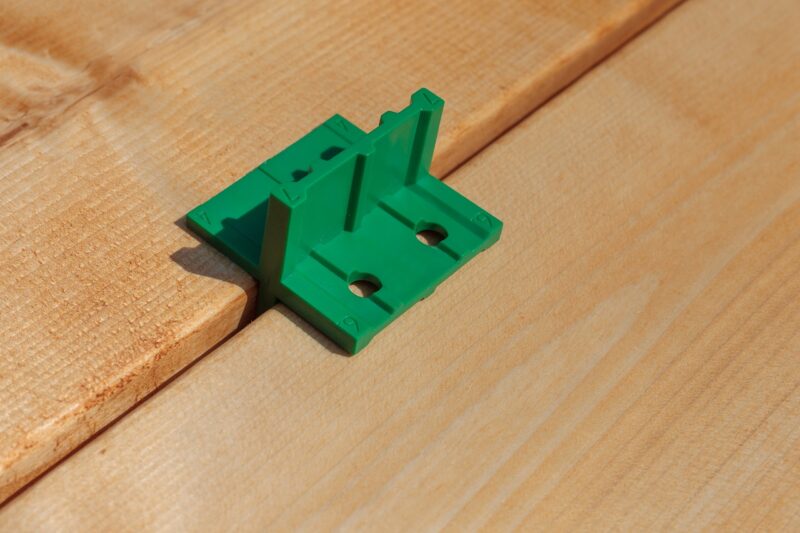
When installing your timber decking, it is recommended that you leave a gap of between 5-8mm between adjacent boards. Board ends can be placed together, while board ends which sit alongside posts should have a 5mm gap, and any board ends which meet a building should have a 10mm gap. You can make spacing a lot easier by using decking board spacers, reducing the need to measure every gap and keeping your boards in place while you build.
Choose the Right Timber for Decking
Decking spacing is super important when installing your deck, but it will only work if you have chosen a suitable timber species. To prevent rot and keep warping at bay, you need a durable species which is well suited to outdoor use. This is where our team at EcoChoice comes in.
Get in touch with us to find the right timber for your outdoor decking.
Tags: spacing, timber decking
Categories: Insights