Published: 04/03/26 By: Mike Bekin
When designing interiors, acoustics are always a consideration. The way noise moves around your space can influence the entire feel of the building, dictating the comfort and overall experience of the guests who pass through it. For many designers, controlling acoustics comes down to material choices – which is where timber comes in.
Learn more In this guide about the acoustic properties of timber and how you can use them to your advantage in commercial interior design.
Does Timber Absorb Sound?
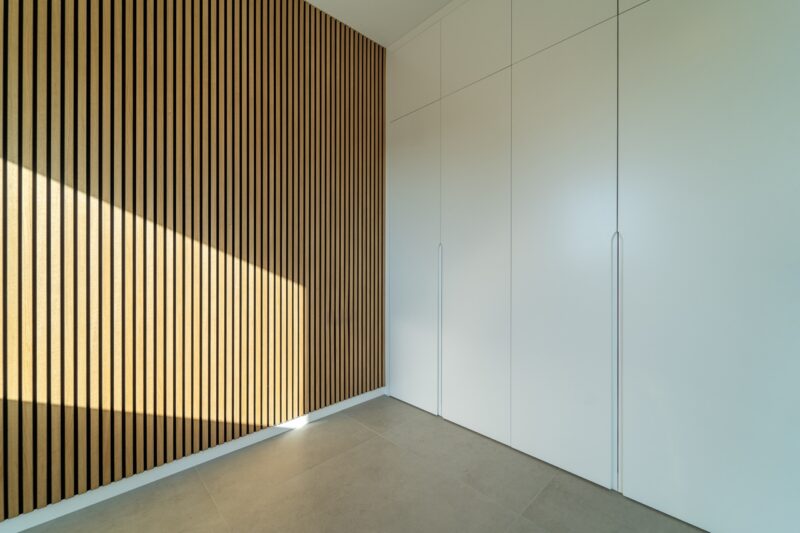
Yes, timber does absorb sound within interiors, making it a smart choice for acoustic panels. Rather than reflecting sound waves, the timber’s porous cellular structure allows it to absorb them and transform them into other forms of energy (e.g. heat), which can reduce issues such as echoes and reverberation in commercial spaces.
The effectiveness of your timber at absorbing sound waves depends on:
- The frequency of the sound waves
- The type of timber you are using
For instance, in a study it was found that for noises with a frequency of between 1-2 kHz, honeycomb timber panels with a paper core were ideal for absorbing sound waves. For frequencies around 4 kHz, timber panels with surface irregularities, such as knots and dips in the wood, were most effective.
Does Timber Reflect Sound?
Just as it can absorb sound waves, it is also true that certain types of timber can reflect them. The intended use of your space will influence which type of timber you should use, whether you are hoping to absorb or reflect noise.
In a theatre, for instance, you might use timber to enhance your acoustics, reflecting noise so that the actors’ voices reach further. You may also incorporate timber which absorbs sounds to reduce the sound travelling out of the space and to control any echoes, making it essential that you strike a balance between the two.
Which Timbers Absorb Sounds and Which Reflect?
When looking at absorption and reflection, it is all about density. A dense timber, such as Oak or Ekki, is going to make it harder for sound waves to pass through the material, meaning they will bounce back within your space. A less dense timber – think lightweight softwoods, such as Pine and Cedar – will allow the sound waves to permeate their structure, absorbing them to reduce the noise reverberations in your space.
How to Use Timber for Commercial Acoustic Control
If you are incorporating timber into your commercial interiors to gain more control over the acoustics, here are some top tips:
- Mix densities: Combine dense hardwoods (for reflection) with softer timbers (for absorption) to fine-tune your acoustic environment.
- Add texture: Create panels with deep grooves to increase sound absorption (the same sort of look as shadow gap cladding)
- Mix materials: Layer your timber panels over other sound-absorbing materials, e.g. foam, to increase the efficiency of your setup.
When installing your panels, focus on large areas across your walls and ceilings to maximise acoustic control. Consider the best areas for sound absorption, such as on a wall next to a neighbouring premises or opposite a sound system. By taking the time to plan your setup before diving into the installation, you can maximise the efficacy of your timber for acoustic performance.
Find Timber Products at EcoChoice
Timber is an excellent, sustainable option for acoustic panels, with a wide variety of species making it easier to find products within your budget. For FSC and PEFC certified timber, choose EcoChoice as your reliable timber supplier.
Tags: acoustics, commercial interior design, Timber
Categories: Insights